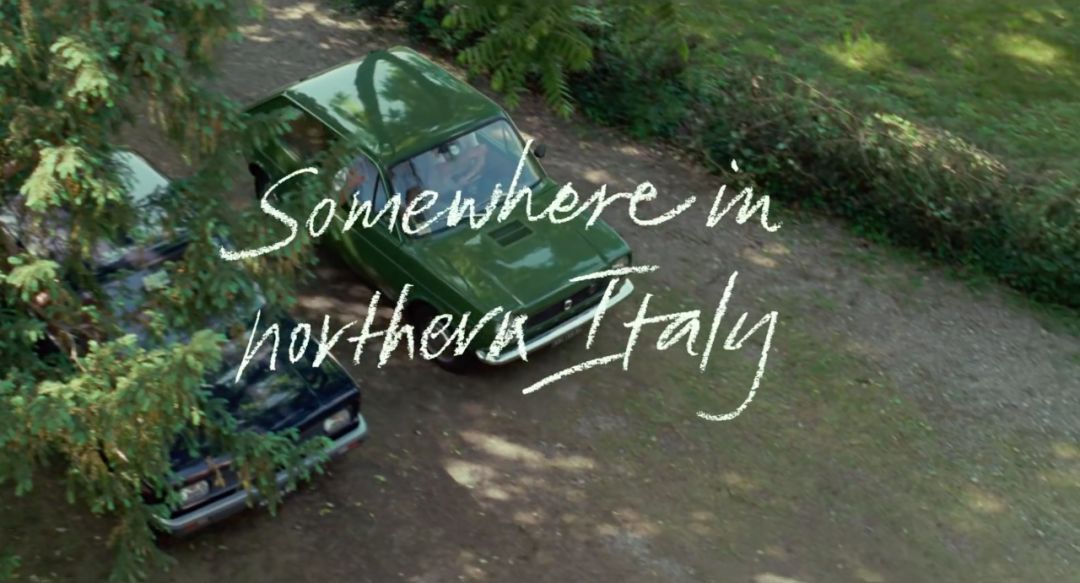
Before the story begins, Call Me by Your Name already makes a choice about how it wants to speak to us. Not loudly, not through design, but through something that feels personal and familiar.
Handwritten titles
The opening credits of Call Me by Your Name appear among everyday objects on Professor Perlman’s desk: papers, books, pens, glue, photographs. The titles are handwritten, not typeset, and they don’t try to stand out. They simply exist as part of the scene.
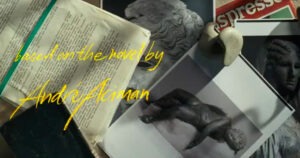
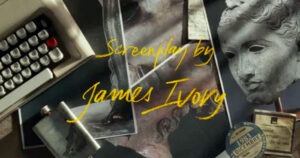
It’s easy to miss them at first, but once you notice them, they feel right. The handwriting looks like it belongs in that house, among the things Elio and his family touch and use every day.
Chen Li
Chen Li is the calligrapher behind those handwritten titles. Luca Guadagnino asked her to create something that wouldn’t look like a font, but like real handwriting — the kind you might actually find on a desk or in a notebook.
Her lettering doesn’t feel decorative or designed for effect. It feels like something someone actually wrote. In the film, that makes a difference: the titles don’t interrupt the story, they quietly sit inside it.
An invitation to the audience
Director Luca Guadagnino explained that he wanted the opening credits to help the audience enter the world of the Perlman family without drawing attention to themselves.
“I wanted to allow the audience to immerse themselves in the world of the Perlman family. For the opening credits, we took Xerox pictures of statues and placed them on Professor Perlman’s desk with various objects—pens, a typewriter, glue. So you see images of the statues with the details of his everyday life, along with the credits.
I didn’t want the ‘indie cool’ typeface. I’m glad I found Chen Li. The titles are handwritten, so it’s like an invitation to the audience.”
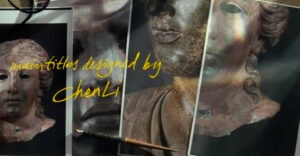
The handwritten titles give a good sense of the film before the story even begins.
All images © Sony Pictures