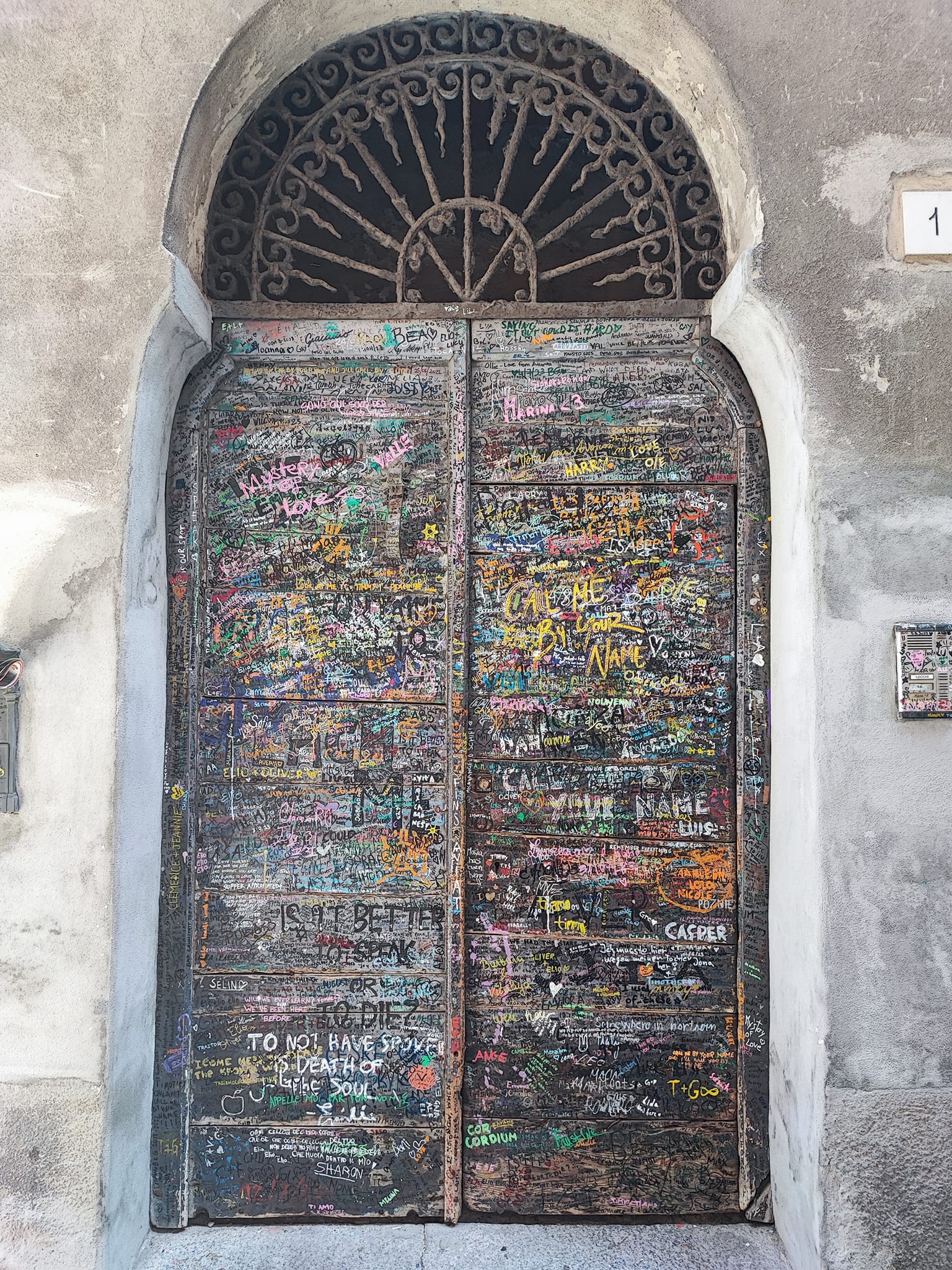
One of the most recognisable locations from Call Me by Your Name can be found in Crema: the arched doorway behind the local newsagent, where Luca Guadagnino places Elio and Oliver in one of their most intimate conversations.
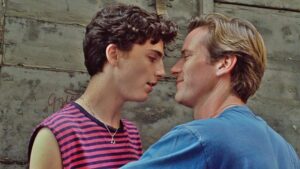
Elio: “Are you happy I came here?”
Oliver: “I would kiss you if I could.”
Over time, this doorway became a quiet point of pilgrimage for fans visiting the filming locations. Recently, however, it also became the focus of concern after graffiti appeared on its surface.
Members of Peaches — a worldwide fan community dedicated to the film — expressed disappointment over the damage. Not because of the attention the location receives, but because of how that attention was expressed.
George Tower, a long-time fan and community member, wrote directly to share his thoughts, alongside photographs documenting the changes to the door.
From a symbol of love to a loss of care
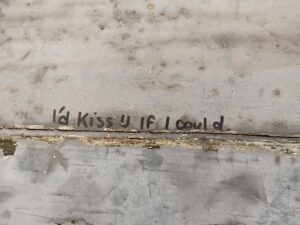
Tower explained that this was not an isolated incident. In April 2021, a photograph posted in the Call Me by Your Name Global Facebook group already showed a small piece of graffiti on the same door. At the time, he worried that it might encourage others to follow.
That concern proved justified.
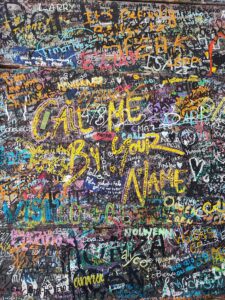
A friend later sent him images of additional markings. With each new addition, the door moved further away from how it appeared in the film — no longer a preserved detail of a cinematic moment, but something increasingly altered.
For Tower, the issue was not fandom itself, but what happens when admiration turns into physical intervention.
Visiting Crema as a guest
Reflecting on his own visit to Crema, Tower described feeling a sense of responsibility as a visitor.
He wrote that being welcomed into a town — and into spaces that belong to its residents — comes with an obligation to leave things as they are. The urge to leave a personal mark, he argued, should always come second to respect for the place and the people who live there.
A wider concern
The discussion soon extended beyond the doorway itself. Tower also mentioned other locations connected to the film, including Fontanile Quarantina, where initials had been carved into trees and other forms of damage had appeared.
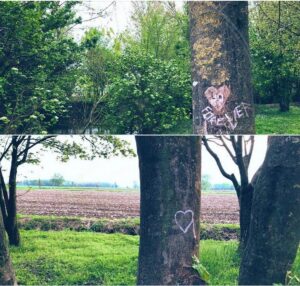
For him, the principle remained the same: admiration does not grant permission.
“The people of Crema have every right to preserve these places as they wish,” he wrote. “They should not have to see them altered by strangers.”
He was careful to stress that such actions do not represent the community as a whole — but they do risk shaping how the entire fanbase is perceived.
“We Peaches,” he concluded, “are sorry.”