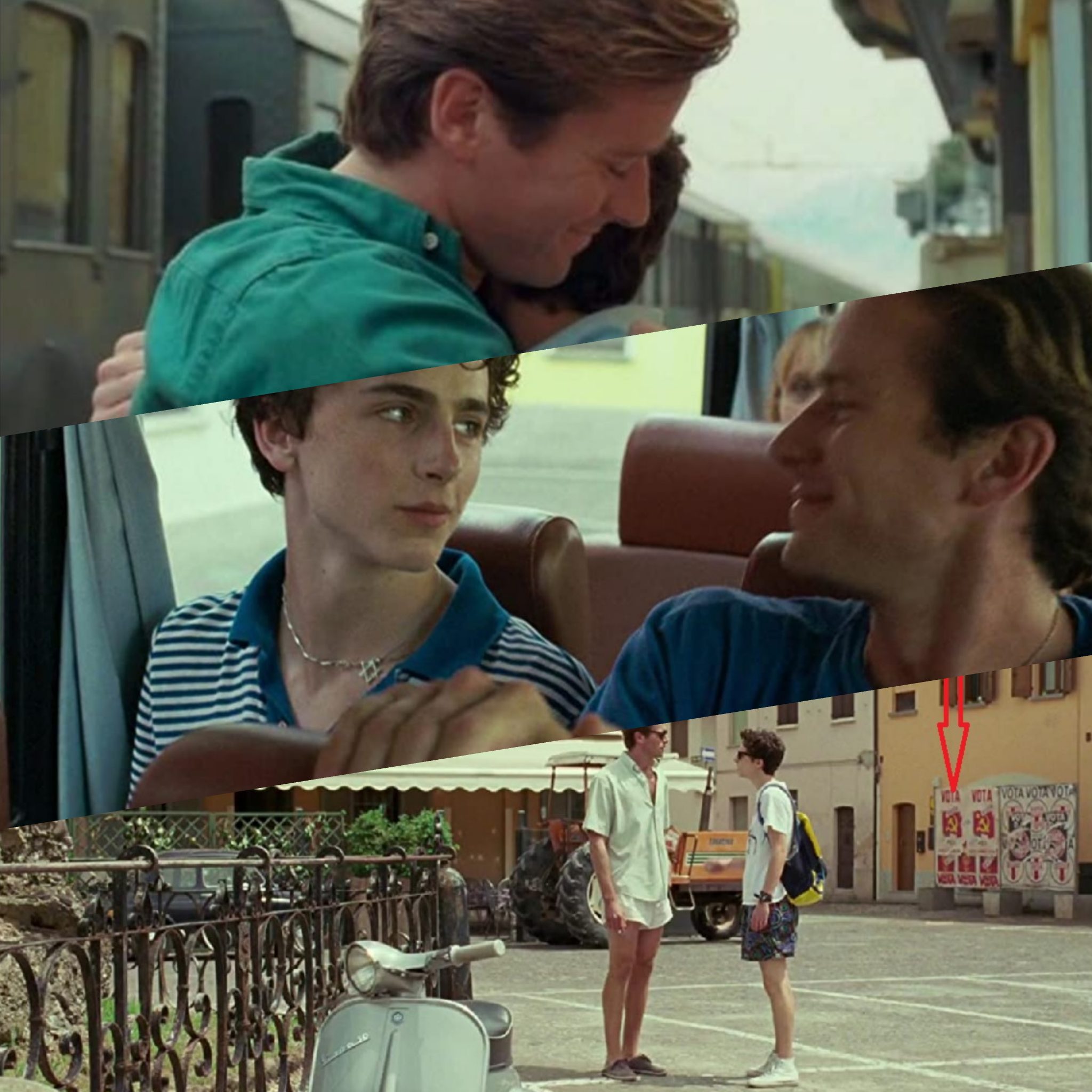
Call Me by Your Name is the kind of film that leaves traces behind. Certain moments don’t fade once the story is over — they return on their own, tied to a look, a line of dialogue, a pause that feels familiar.
Among fans, a few scenes keep resurfacing naturally. They’re brought up in conversation, remembered out of context, sometimes recalled without needing to explain why. Not because they are dramatic or decisive, but because they carry something essential.
This is not an attempt to analyse or rank the film. Instead, it brings together three scenes that many fans return to — scenes that feel inseparable from what Call Me by Your Name is, and from why it continues to matter.
Because I wanted you to know- scene
There may be no other scene that captures the film’s hazy, dreamlike atmosphere more clearly than the long shot that follows Elio as he walks around the First World War memorial in Pandino, finally putting his feelings for Oliver into words.
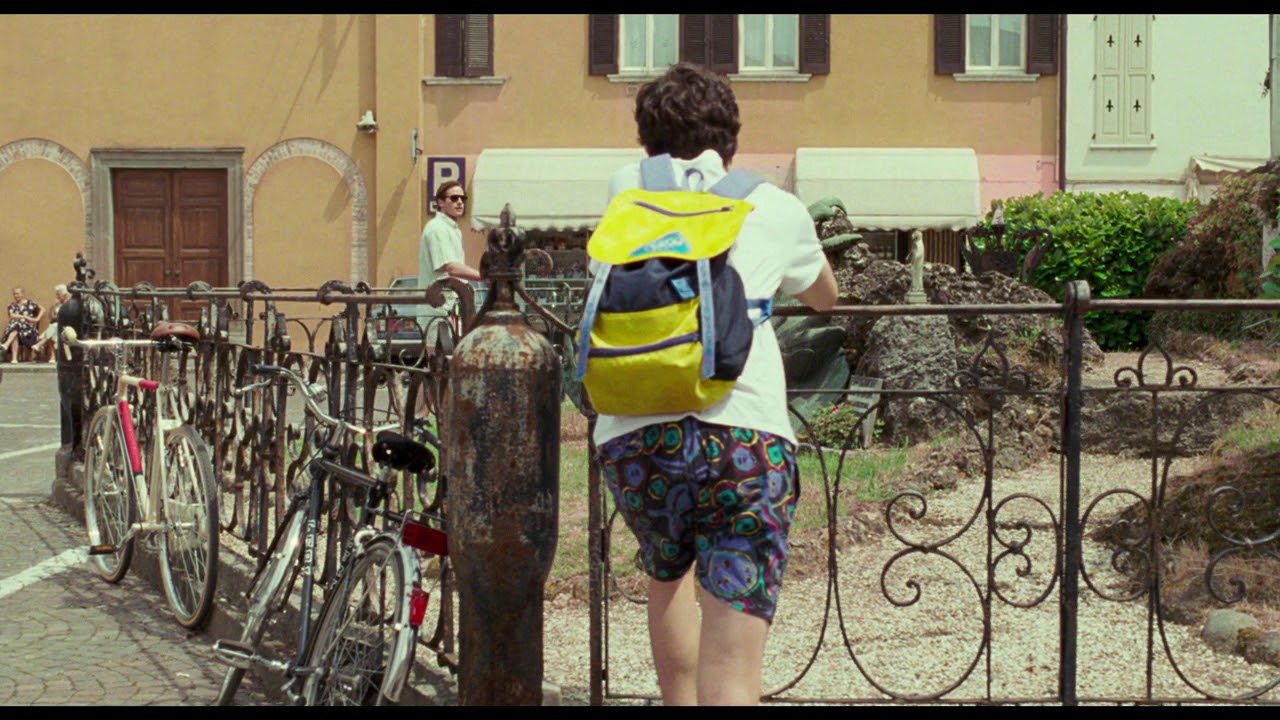

Shot in a single take, the scene feels almost disarmingly simple. And yet, it is often cited as one of the film’s most powerful moments. Stripped of visual tricks or dramatic emphasis, it unfolds with a kind of natural inevitability. What happens here is, quite simply, a confession — one that builds slowly, almost tentatively, without ever losing the viewer’s attention.
“The book is so genuine, so accomplished and well written,” Chalamet said, “and I felt like that one scene would be a barometer for whether we would pull it off or not.”
The scene was not an easy one to shape. In the novel, it is written with such clarity and emotional precision that translating it to the screen posed a real challenge. It was Armie Hammer who suggested filming it in one long, uninterrupted shot, a choice that all involved agreed made the moment feel more truthful.
“On the day, Luca Guadagnino didn’t quite know how he wanted to shoot it, and it was actually Armie Hammer who had the idea to do it in one take and in a wide shot.” Chalamet recalled. “It took away the whole cringey Hollywood feeling. If you mute the movie you can’t tell it’s somebody telling somebody else that they are in love with them.”
Some critics have suggested that this approach keeps the characters from being pulled out of their emotions. It may also underline how difficult it is to speak the truth — how much effort it takes to name a feeling out loud, and how much can be learned in the act of doing so.
When Elio says,
“Because I thought you should know.”
he seems to be answering Oliver’s question, and yet he is also testing the words for himself.
“Because I wanted you to know?”
The sentence is repeated, each time slightly differently — first almost under his breath, then more firmly, and finally with a sense of release. With every repetition, Elio allows himself to feel the weight of what he is saying. The subtle shifts in Timothée Chalamet’s voice make the moment resonate long after the words are spoken.
The Last Trip Together
Elio and Oliver spend a few days in Bergamo before Oliver returns home for good. When the bus arrives at the main square and Oliver walks over to Elio with a wide smile, gently nudging him, the happiness between them feels almost tangible — as if it briefly spills beyond the frame of the film.
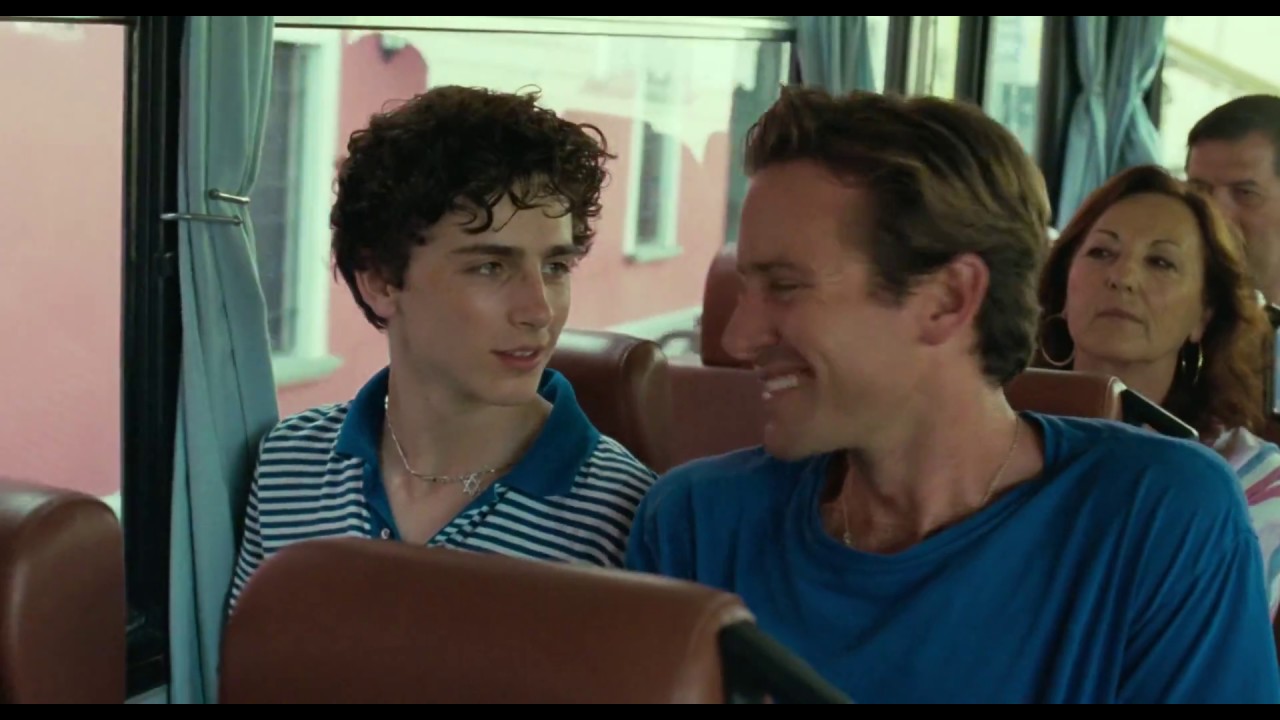
The cinematography during this sequence is often remembered as breathtaking. The surroundings seem to exist solely to hold the two of them, giving their relationship space to unfold. At the same time, this is one of the film’s most bittersweet passages. The joy of being together is inseparable from the knowledge that it will soon end.
They run up the hill outside the city, calling each other’s names; they walk hand in hand, exchanging glances filled with affection. In the narrow, dimly lit streets of Bergamo, they kiss passionately under the northern Italian night — even as the end draws closer.
The outcome is never in doubt. And yet, as the film moves closer to the inevitable farewell, these moments allow the relationship to feel complete. Brief as it was, it carries the same emotional weight as something much longer-lived — a reminder that duration does not determine significance.
The Station
At the train platform, just before Oliver leaves, Elio asks whether he has his passport. Oliver nods. What follows is silence: a wordless embrace, a hand at the throat as Elio struggles to contain what he feels. Small gestures, carrying more meaning than any spoken farewell.
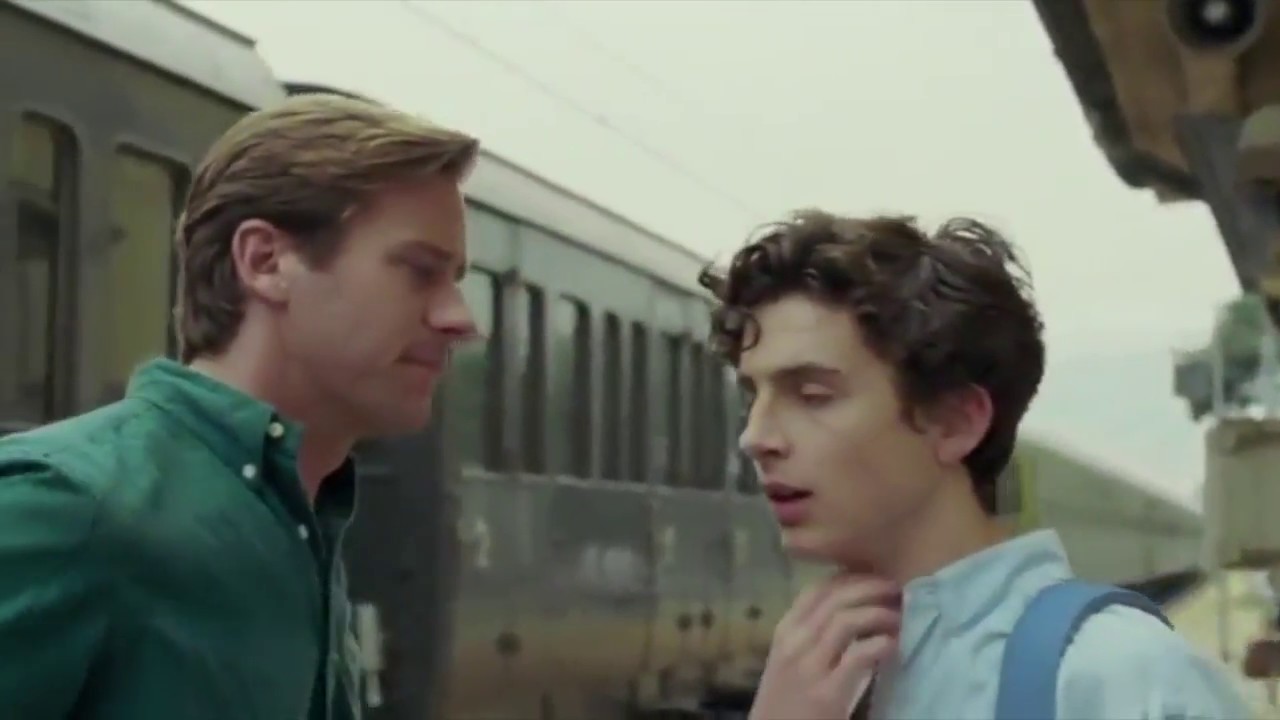
Elio is wearing Oliver’s shirt — the same one Oliver wore when he first arrived in Italy. In this way, arrival and departure mirror one another. The changing ownership of the shirt suggests a merging of identities. Having “exchanged names,” Oliver is, in a sense, still present.
As the final goodbye approaches, there is a shared wish to hear Oliver’s familiar “Later!” — the phrase he uses so easily throughout the film. But this time, it does not come. He knows there will be no later, and he refuses to leave behind an empty promise.