Some films are remembered through dialogue.
Others through faces, or music, or places.
Call Me by Your Name is also remembered through objects — things that are never highlighted, never pointed at, yet somehow stay with us. They don’t explain the story. They don’t symbolize it in an obvious way. They are simply there, woven into the everyday life of the film.
These objects matter not because they are important, but because they are familiar. They belong to the rhythm of the house, the summer, the people moving through it.
Books and notebooks
Books are everywhere in the Perlman house. Stacked, open, underlined, carried from room to room. Elio’s notebooks sit among them — not precious, not curated, but used. Pages filled with thoughts, music, translations, fragments.
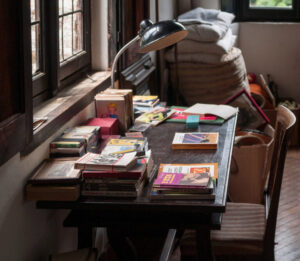
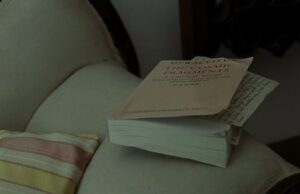
Nothing about them feels staged. They look handled, returned to, left behind and picked up again. They don’t announce intelligence; they reflect habit.
The piano
The piano is not introduced. It is already there.
It stands as part of Elio’s daily life, not as a dramatic centerpiece. He plays it the way someone plays something they’ve grown up with — sometimes seriously, sometimes carelessly, sometimes just to pass time or provoke a reaction.
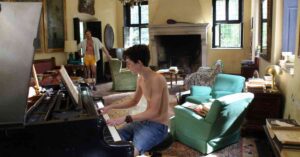

The instrument doesn’t elevate the moment. It grounds it.
Bicycles
Bicycles appear again and again, never framed as symbols of freedom or youth. They are simply how people move. Between the house and the town, between conversations, between moments that haven’t fully formed yet.
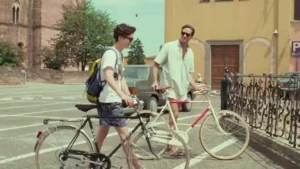
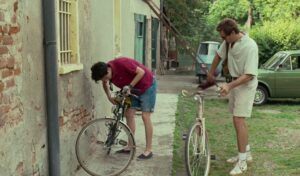
They allow closeness without confrontation. Side by side, never face to face.
Clothing
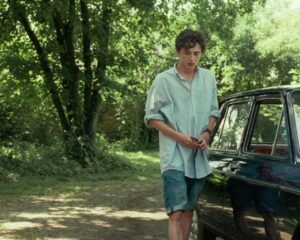
Shirts are borrowed. Shorts are worn and re-worn. Nothing looks chosen for effect.
Clothes in this film feel lived in. They hold warmth, routine, familiarity. When something changes — when a shirt changes owners — it happens naturally, without announcement.

 ű
ű
The desk
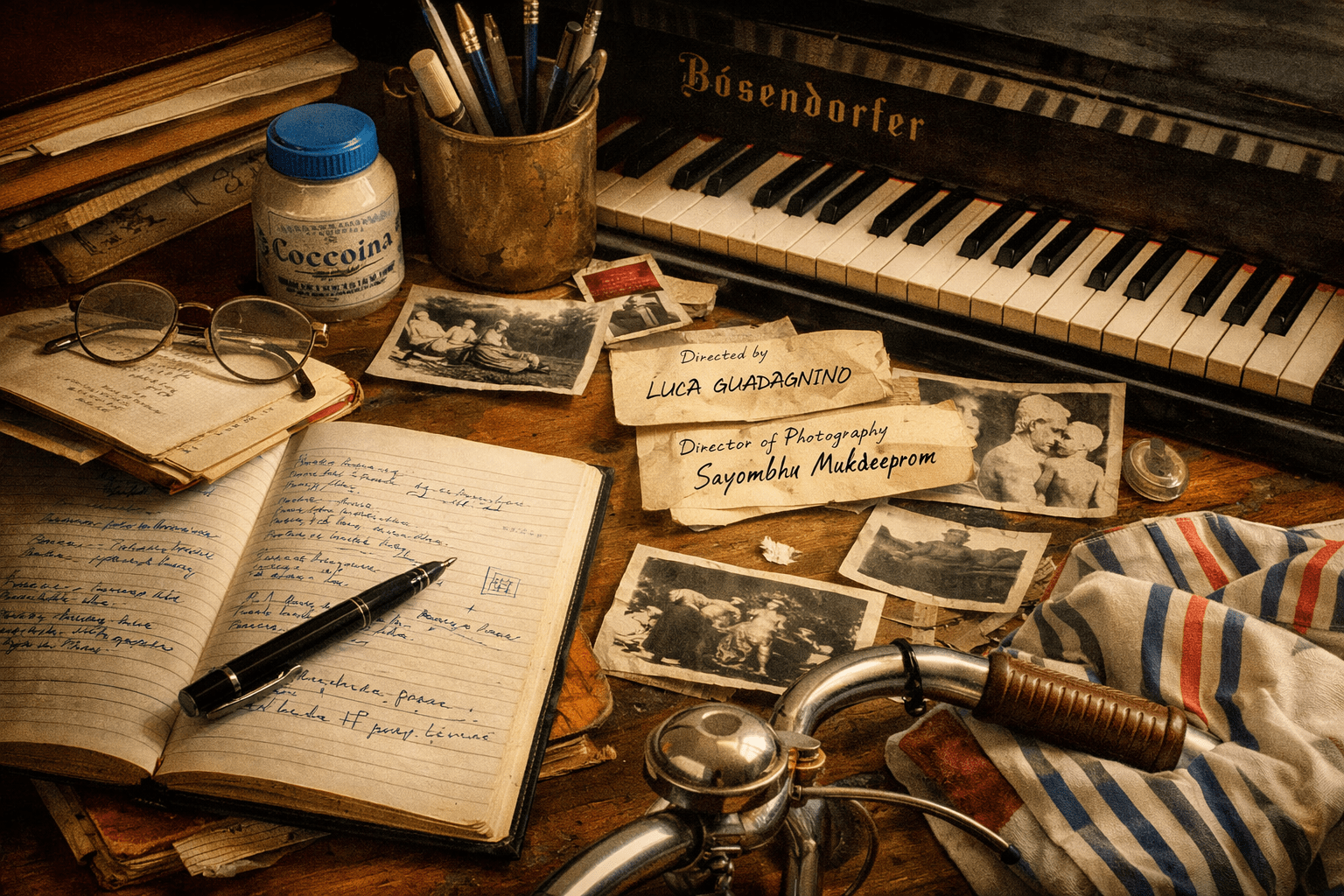
Professor Perlman’s desk is crowded. Papers, photographs, pens, glue, fragments of a life spent thinking and collecting. The opening titles appear here, handwritten, among real objects, not layered on top of them.


It feels less like a surface arranged for a film, and more like one that existed before the camera arrived.
Why these objects stay with us
None of these things demand attention. That is precisely why they remain.
They don’t explain the emotions of the film. They accompany them. They make the world feel intact — not designed to tell a story, but already full of one.
Long after specific scenes blur together, these objects linger. Not as symbols to decode, but as traces of a summer that felt whole while it was happening.
Images: film stills and Japanese promotional brochure. © Sony Pictures.