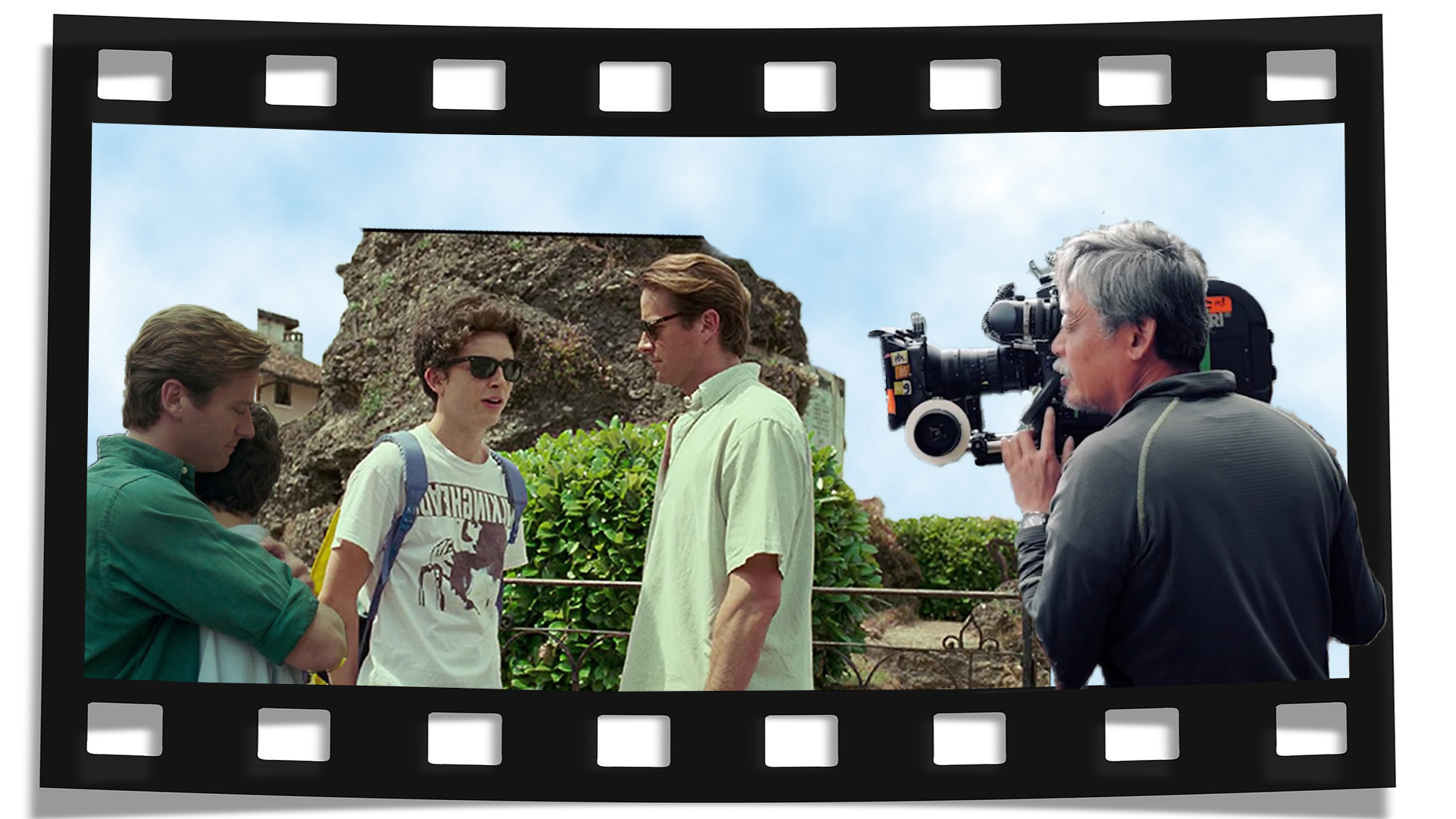
When Luca Guadagnino took over the direction of Call Me by Your Name, he relocated the story from the Italian Riviera to Crema, the Lombardy town where he lived. From the start, cinematographer Sayombhu Mukdeeprom approached the project with a clear and unusual idea: to shoot the entire film using a single lens.
“The producer asked me if I wanted something different, a wider lens? Just in case… I said no. I want to stick to this approach because that’s how I work. I think if you limit yourself, you’re fighting within the boundaries of your idea.”
Although committed to the concept, Mukdeeprom first needed to understand whether it would truly serve the story. Years before production began, he had already visited the region and become sensitive to how the landscape and summer light shaped Guadagnino’s vision.
“I’m from South East Asia… But in Italy the quality of light is surprising, because it’s drier, so the color and contrast is so much better and changes in subtle, poetic ways. I fell in love with it.”
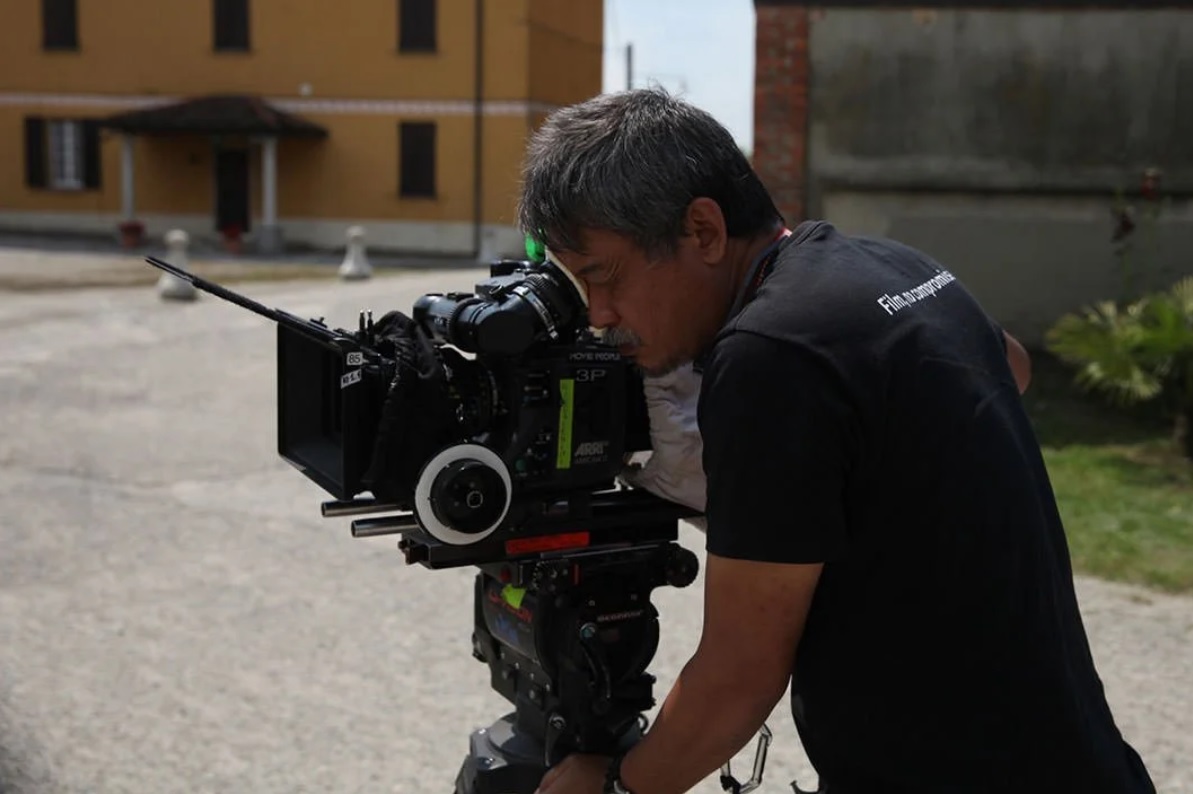
Producer Peter Spears later recalled watching Guadagnino and Mukdeeprom walk through locations together, responding instinctively to light, space, and atmosphere. That preparation would soon be tested.
What was meant to be a sunlit summer shoot turned into something very different. Streams became torrents, planned ponds turned into rapids, and actors sucked on ice chips so their breath wouldn’t show on camera. Out of 34 shooting days, 28 were marked by heavy rain.
“We were freaking out and we’re reconstructing the light every day,” Guadagnino admitted.
With little budget flexibility and a tight schedule, the production relied heavily on Mukdeeprom’s experience working in monsoon seasons. Years of adapting to unpredictable weather had taught him how to balance contrast, color, and texture directly on set rather than relying on post-production fixes.
“I don’t like working this way, ‘fixing it in post,’ but I’ve learned… what colors must be present on set when we shoot and which I can find later on.”
Much of the film’s warmth comes from the careful relationship between interior and exterior spaces. Guadagnino frequently framed scenes through windows, allowing light to move naturally between inside and outside, shaping mood rather than forcing it.
“One of the reasons I moved the film to where I lived is because I knew the house… it was perfect for the characters,” said Guadagnino.
Mukdeeprom credited both Italian architecture and Guadagnino’s precise sense of space for allowing the film to retain its sun-drenched feeling even when the weather refused to cooperate.
“I’ve never had a collaboration with a director that was so natural in how the scene unfolds and how I just instinctively react based on what he is doing.”

Spears later described Mukdeeprom’s presence on set as stabilising during the worst conditions:
“Considering the conditions, it’s surprising there wasn’t more panic and I think that was largely because of him.”
For Mukdeeprom, the guiding ideas during filming were simple.
“During the shoot, only two words came to mind: ‘sunny’ and ’80s’.”
Rather than forcing a specific look, he focused on observing nature, light, and movement as they were — trusting that the film’s emotional tone would emerge from those elements naturally.