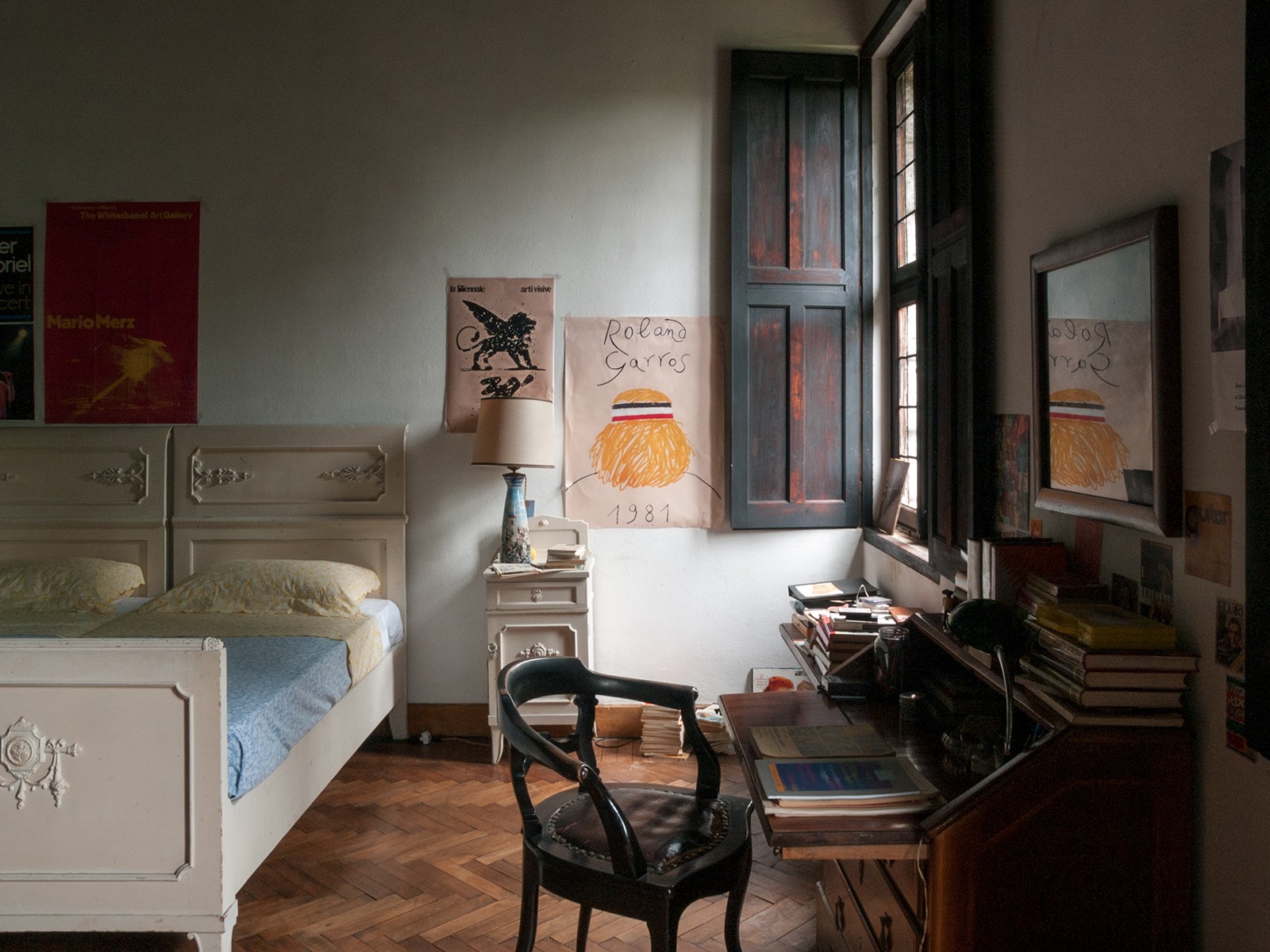
In the first part of this series, we talked about how Call Me by Your Name built its world. But what really makes that world feel so real? This time, we take a closer look at the spaces where the story unfolds — the rooms, the garden, the streets — and how they quietly shape desire, closeness, and everyday moments. In this second part of the interview, production designer Samuel Deshors shares how those spaces came together, and how small, very practical decisions helped create the atmosphere we all fell in love with.
The Perlman House
The Perlman house is more than just a location — it feels like a place where generations have passed through, leaving traces behind. That was very intentional.
“We were looking for a family home, we wanted to feel that the house stayed in the family for generations. The weight of the past was already there, and we just emphasized it.”
The goal wasn’t to transform the house completely, but to listen to what it already offered. Paintings, books, instruments, furniture — everything was chosen to suggest a family of intellectuals and artists without spelling it out.
“We placed paintings, books, instruments in all the rooms, for this family of intellectuals and artists.”
The work happened in layers: gathering objects from antiquarians and other Italian homes, then composing the final spaces room by room so that nothing felt accidental.
The Garden and the Trees
The garden plays a quiet but important role in the film, especially during moments of intimacy and discovery. What many fans don’t know is how much work went into making it look effortless.
“The house was uninhabited for many years. The garden was fallow and many things were dead. We brought many plants — Virginia creepers, rose trees, etc. All the fruit trees.”
Some solutions were more improvised than they appear on screen.
“The peach trees had very little fruit in the spring, and we couldn’t find an apricot tree that was the right size, so for the apricot tree scenes, we hung some apricots from the leaves of a peach tree!”
It’s one of those details you’d never notice unless you were told — and that’s exactly the point.

Bikes, Cars, and Moving Through Summer
Movement is everywhere in the film: bike rides, drives, wandering through towns. Even here, design mattered.
“The bikes were picked just like the costumes — we proposed ideas according to what seemed to suit the characters best.”
Elio’s bike doesn’t feel like Oliver’s, and Marzia’s doesn’t feel like either of them. They quietly tell you something about each person before a word is spoken.

Finding the right cars was more complicated.
“To find enough of them to animate all the scenes in the streets without having to always use the same few cars was difficult.”
A whole team worked on sourcing vehicles that matched both the period and the rhythm of the town.

Crema, Bergamo, and Empty Streets
The places Elio and Oliver pass through — Crema, Bergamo, the countryside — feel unusually open and unhurried. That sense of space was essential.
“Empty spaces, be they countryside roads, the streets of Crema or Bergamo, they all contribute to that bubble I was talking about.”
Even the hostel room in Bergamo wasn’t recreated.
“The hostel room was really in a hostel in Bergamo!”
The locations weren’t dressed up to look cinematic — they were allowed to be themselves.
Looking Back
When asked what he feels most strongly about now, Deshors doesn’t talk about a single object or scene.
“More than proud, I am happy to see the result of this adventure.”
Working with limited time and budget wasn’t always easy, but the response to the film made it worthwhile.
“It’s nice to have an audience relive a story that is familiar to them through Luca’s gaze.”
For fans, that care shows. The world of Call Me by Your Name doesn’t call attention to itself — it simply invites you in, and somehow makes you feel like you’ve been there before.
Photography: Giulio Ghirardi