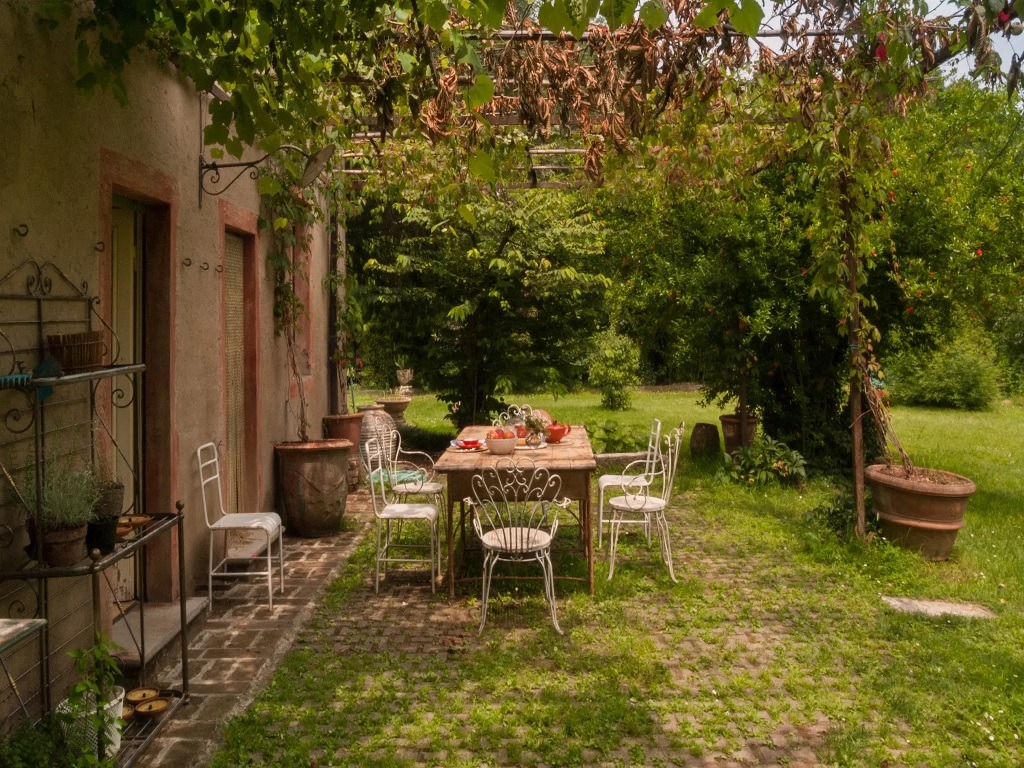
One of the reasons Call Me by Your Name works so well is that the setting isn’t just a backdrop — it’s part of the story. The places, the rooms, the streets, even the empty spaces all seem to breathe along with the characters. That atmosphere didn’t happen by accident. It was carefully shaped through close collaboration between director Luca Guadagnino and production designer Samuel Deshors.
Deshors had already worked with Guadagnino years earlier, and from the start, their way of thinking aligned. Luca surrounds himself with people from very different backgrounds, cultures, and languages, yet somehow turns them into a single, fluid creative unit. For Deshors, that mix of perspectives was essential — it created a working environment where ideas could move freely and intuitively.
“Indeed, that’s one of Luca’s many talents – he manages to mix people from very different origins and horizons.”
Space as emotion
Guadagnino once said that space is everything, and Deshors agrees — though not in a literal sense. Space alone doesn’t make a film, but the atmosphere created within it does. Locations and sets weren’t treated as decoration, but as emotional containers where the actors could fully inhabit their roles.
“The location and the sets are extremely important parts of Luca’s vision. He likes to create universes, bubbles in which the actors (and the team) are immersed.”
That idea of a “bubble” became central to the film. Once the feeling of an Italian summer was established — slow, heavy, almost suspended — the intensity of first love could unfold naturally inside it.
Making summer feel real — even in the rain
Ironically, Call Me by Your Name wasn’t shot during a perfect summer. Much of the filming took place in spring, often in pouring rain. The advantage of working around a single main location, like the Perlman villa, was flexibility: scenes could quickly shift indoors or outdoors depending on the weather.
Shooting on film also played a major role. Combined with Sayombhu Mukdeeprom’s sensitivity to natural light, it allowed the film to retain warmth and softness even under difficult conditions.
“We shot Call Me by Your Name on film, which rendered some beautiful and special colors… The actors really made that languorous, slumbering summer feel possible.”

Desire without forcing it
Rather than designing spaces to feel overtly erotic, the goal was to create environments where sensuality could emerge on its own. Pools, bedrooms, streets, countryside paths — places where bodies move, rest, and brush past each other.
“We didn’t want to give the film any special erotic atmosphere necessarily, but, rather, create places where the characters’ sensuality could be fully expressed.”
Time itself was meant to slow down inside this world, allowing glances, pauses, and gestures to carry weight.
Why 1983 mattered
The decision to move the story from 1987 (as in the novel) to 1983 wasn’t just narrative — it shaped the entire visual approach. For Deshors, this earlier setting allowed a sense of innocence and freedom that would soon be lost.
“Right after 1983, AIDS dramatically changed everything.”
Research focused on small, often overlooked details: street markings, signage, packaging, everyday objects. Inside the villa, the work was subtler — the house already carried layers of time. The aim was to balance the weight of the past with the ordinariness of daily life.

A house that already knew the story
Villa Albergoni wasn’t transformed into the Perlman home so much as revealed as one. Guadagnino had known the house for years and felt it already held the right energy. Deshors and his team emphasized that history rather than replacing it.
Paintings, books, musical instruments filled the rooms, reinforcing the sense of a family shaped by art and intellect. Antique pieces were mixed with everyday objects, making the space feel lived-in rather than staged.

Working within limits — and loving the result
Time was short, the budget modest, and not every day was easy. But looking back, Deshors speaks less about pride and more about gratitude — for the collaboration, the shared effort, and the response the film received.
“What makes me the happiest is the reception of the movie… It’s nice to have an audience relive a story that is familiar to them through Luca’s gaze.”
In the second part of this interview, Samuel Deshors goes deeper into how these spaces were actually created, and how everyday, practical decisions shaped the world of the film.