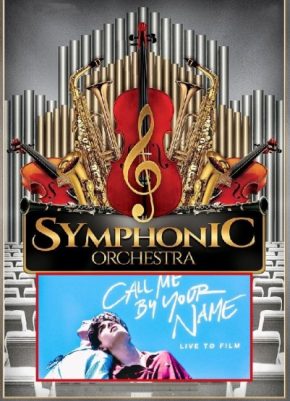
How the Manila Symphony Orchestra Brought Call Me by Your Name to Life
Among the many carefully considered directorial choices made by Luca Guadagnino, music plays a defining role in Call Me by Your Name. Set during the summer of the 1980s in northern Italy, the film tells the story of a love that must remain unspoken. Through its music, the inner thoughts and emotions of Elio and Oliver unfold, functioning almost as an unspoken narrator.
“We use the piano a lot in the film because these sounds are in a sense a dialogue between Elio and himself, and between Elio and Oliver, both internally and externally,” Guadagnino explained in an interview with Pitchfork.
The Live Concert Premiere
On October 28, 2018, the world premiere of Call Me by Your Name Live took place at the Samsung Hall in SM Aura mall, Philippines. The Manila Symphony Orchestra performed the film’s music live while the movie was screened in full.

The orchestra accompanied the film from beginning to end, remaining faithful to the classical compositions of the original soundtrack while also integrating the Europop songs heard on radios and in select scenes. Notably, the musicians also underscored moments that were originally silent in the film, such as the opening sequence featuring Hallelujah Junction by John Adams, played after Elio and Oliver’s first meeting.

Silence, Restraint, and Emotional Weight
One of the most striking aspects of the performance was the orchestra’s restraint. In scenes traditionally completed in silence—most memorably, the conversation between Elio and his father near the end of the film—the musicians lowered their instruments as the lights dimmed, allowing the spoken words to carry the full emotional weight.
With the orchestra fully visible, this deliberate stillness felt like an invitation to listen more closely to Mr. Perlman’s words.
Technical Challenges Behind the Performance
In interviews conducted before the concert, members of the orchestra acknowledged the technical difficulty of performing live alongside a feature film, despite days of rehearsal.
“You have to be in sync with the film and it’s really challenging for the conductor because he really has to keep in rhythm with the movements,” explained concertmaster Gina Perez-Medina.

To ensure precise timing, custom software was developed to assist the conductor, displaying cues on a tablet that indicated when each piece and beat began and ended.

Midway through the performance, the orchestra took a brief intermission—an unusual but practical decision, given the complexity of the undertaking. For some audience members, the pause felt disruptive, arriving just after Futile Devices by Sufjan Stevens, a moment deeply embedded in Elio’s inner turmoil and sense of unresolved longing.

A Final Note
As the concert reached its conclusion, the orchestra performed Visions of Gideon while Elio sat motionless before the fireplace, absorbing the news of Oliver’s engagement. Hearing the piece live transformed the scene into a shared emotional experience, as the piano notes cut through the auditorium and the familiar image of Elio’s tear-streaked face filled the screen.

In that moment, the power of the film’s music—already so central to its emotional impact—was fully realized in live performance, leaving the audience with a feeling that lingered long after the final note faded.
Photos: Karen de la Fuente