Few films include an explicitly Jewish holiday moment as naturally as Call Me by Your Name. In its final act, the story shifts to winter — months after Elio and Oliver’s farewell at the train station. The Perlmans remain in Italy for the holidays, and the celebration unfolding in their home leaves little doubt about which one it is.
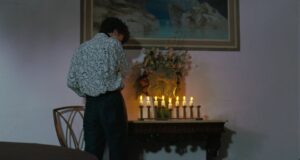
Elio is seen playing with chocolate coins (gelt), and he pauses in front of the family menorah. The symbolism is subtle but unmistakable.
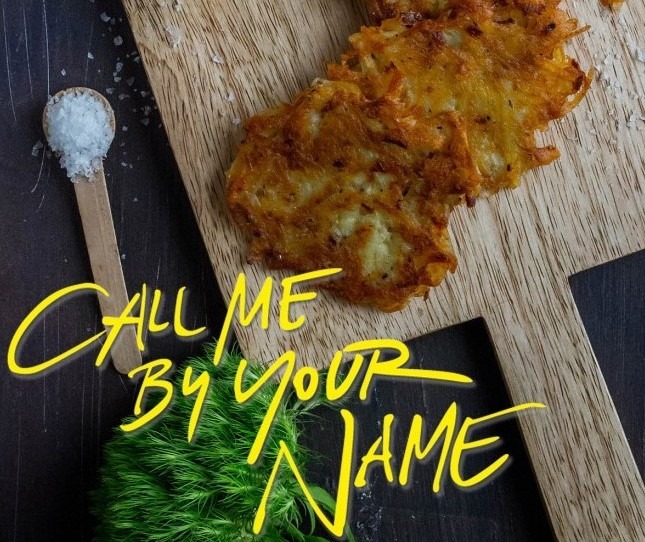
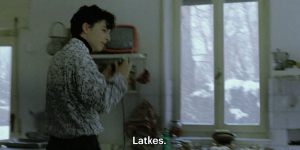
Later, when Elio walks into the kitchen, Mafalda is preparing latkes — traditional potato pancakes fried in oil.



The Festival of Lights
Hanukkah, often called the Festival of Lights, lasts eight nights. Each evening, one additional candle is lit on the menorah, the nine-branched candelabrum used specifically for the holiday.
The tradition commemorates events dating back to 165 BCE. After reclaiming the desecrated Temple in Jerusalem from Syrian-Greek forces, the Jewish people found only a single cruse of kosher olive oil — enough to keep the Temple menorah burning for just one day. Producing new consecrated oil would take eight days.
According to tradition, a miracle occurred: the small amount of oil burned for eight full days. This event became the foundation of Hanukkah, and oil remains central to its culinary customs.
Food as Memory
In remembrance of the miracle, foods fried in oil are traditionally prepared during Hanukkah. Among the most beloved are sufganiyot (jelly-filled doughnuts) and latkes — crispy potato pancakes that are simple to make and dangerously addictive.
In the Perlman household, latkes appear naturally, without explanation — just another detail woven into the texture of family life.
If you’d like to try making them yourself, you can find a classic recipe here:
https://www.onceuponachef.com/recipes/latkes.html
Symbolism at the Table
The dining table in the film is decorated with pomegranates — a traditional Jewish symbol often associated with the 613 commandments of the Torah, as legend holds that a pomegranate contains 613 seeds.
Citrus fruits resembling etrog can also be seen, though these are more commonly linked to Rosh Hashanah or Sukkot than Hanukkah. Still, their presence reinforces the cultural and religious texture of the Perlman home.
In Call Me by Your Name, even a plate of latkes becomes part of the emotional landscape — a reminder that life continues, seasons turn, and traditions quietly endure.