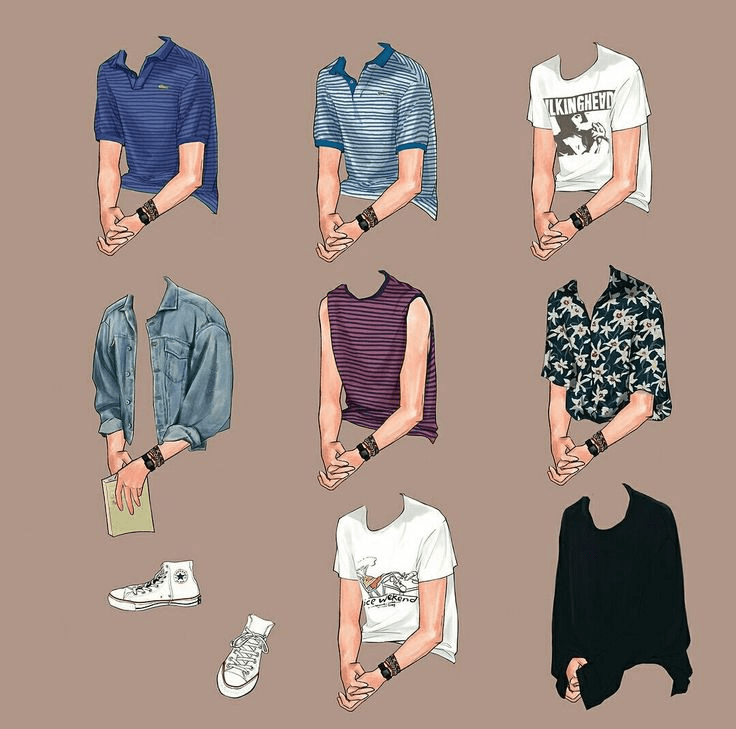
How Giulia Piersanti built Elio and Oliver through clothing
Elio: Unstudied Summer Ease
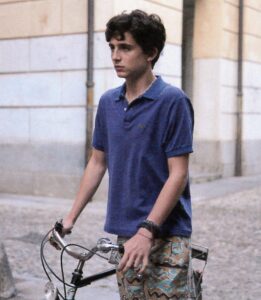
Elio’s wardrobe feels like it belongs to a real teenager drifting through a long Italian summer: slightly oversized shirts, soft cotton polos, short shorts faded by the sun. Costume designer Giulia Piersanti said she intentionally avoided anything too polished or too “period.”
“I didn’t want the costumes to feel period. I wanted them to feel real — as if the characters had chosen these clothes themselves.” — Giulia Piersanti, Vogue interview
Many of Elio’s pieces were vintage finds or garments sourced from the actors’ own wardrobes. This gives his clothes that lived‑in softness — the sense that they already existed before the camera arrived. His loose silhouettes mirror his emotional world: open, curious, and not yet fully formed.


Oliver: American Structure in an Italian Landscape
Oliver’s style stands in deliberate contrast. His crisp Oxford shirts, khaki shorts, leather sandals, and Ray‑Ban sunglasses signal confidence and a clear sense of self. Piersanti explained that Oliver’s wardrobe needed to feel more structured and intentional than Elio’s — a visual cue that he is an outsider, arriving with his own rhythm and identity.
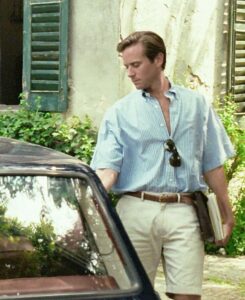
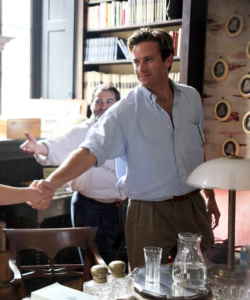

As the story unfolds, his clothing subtly relaxes. According to STITCH, this shift reflects Oliver’s growing comfort with the Perlman family and with Elio. It’s a quiet but meaningful detail: the clothes soften as the character does.
A Costume Philosophy Built on Authenticity
Piersanti approached the film with a very specific vision: the costumes should never distract from the emotional world of the characters. She avoided bright colors and synthetic fabrics, choosing instead a palette of washed blues, pale greens, whites, and earth tones — colors that blend seamlessly with the villa, the garden, and the northern Italian light.
“The clothes needed to merge with the environment. Nothing should feel like a costume.” — Giulia Piersanti, Vogue interview
This is why the wardrobe feels so natural. The characters don’t look styled — they look lived in.


Why the Film’s Style Endures
The costumes of Call Me by Your Name remain influential because they were never designed to be fashionable. They were designed to be truthful. Elio’s softness, Oliver’s structure, the villa’s warmth — all of it is reflected in the clothing.
The result is a visual language that feels timeless: intimate, sun‑washed, and emotionally honest. Piersanti didn’t create outfits. She created a world.
Image source: Call Me by Your Name Japanese deluxe brochure
Film stills © Sony Pictures
Featured image: Fanart inspired by Call Me by Your Name. Shared for non-commercial, illustrative purposes.